
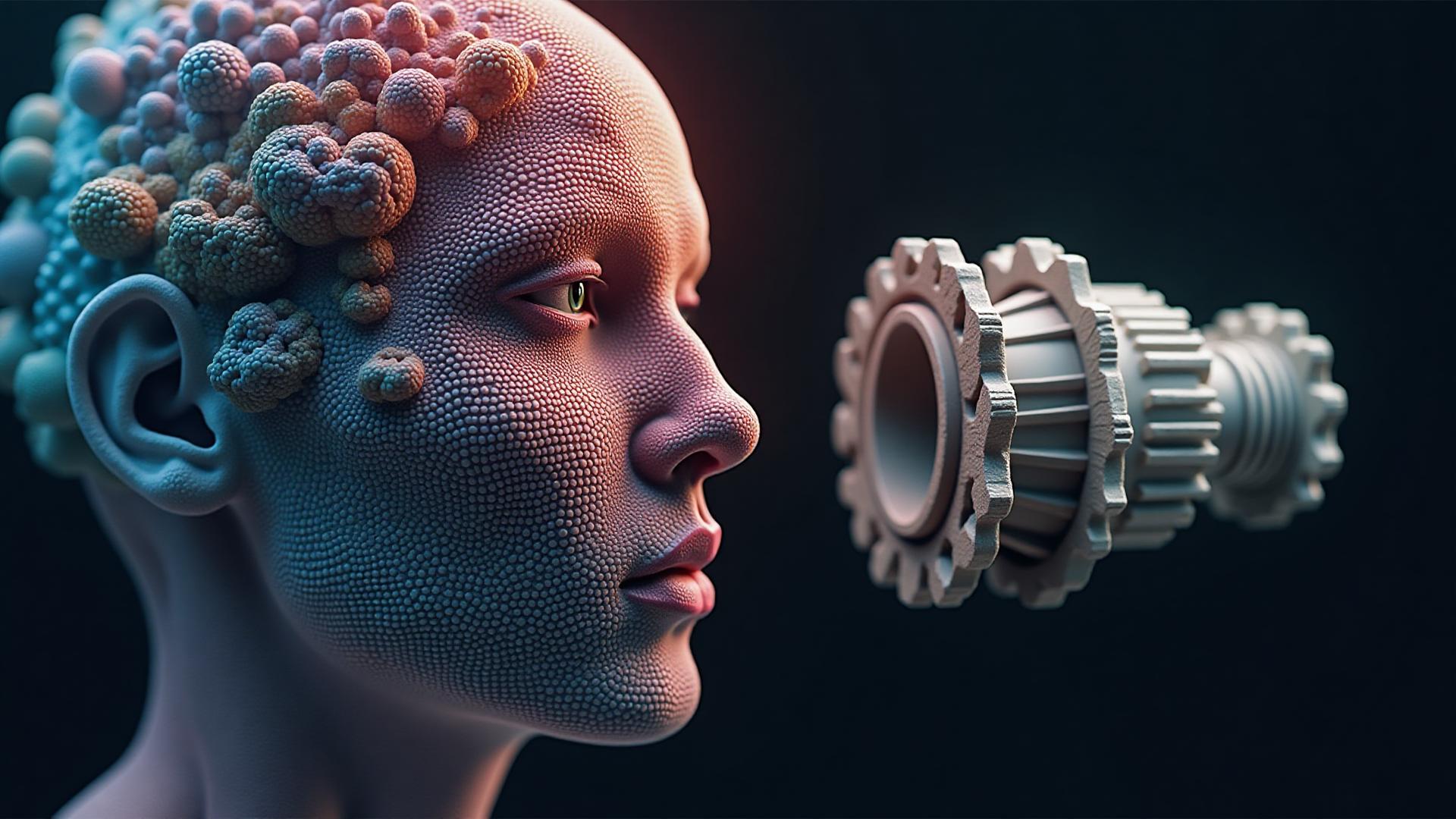
Artificial intelligence has revolutionized many aspects of digital creation, and 3D modeling is no exception. The promise of generating complex 3D models from simple text prompts sounds like a dream come true for designers, engineers, and hobbyists alike. But how close are we to that reality in 2025?
In this comprehensive review, we'll explore the current state of text-to-3D AI technology, examining what these tools can genuinely deliver, where they fall short, and most importantly, when you should (and shouldn't) rely on them for your 3D printing projects.
The Promise: What Text-to-3D AI Offers
Text-to-3D AI models represent an exciting frontier in digital manufacturing. These systems promise to democratize 3D modeling by allowing anyone to create three-dimensional objects using nothing more than natural language descriptions.
Key Advantages of Text-to-3D AI
- Rapid Concept Visualization: Transform ideas into visual 3D representations in minutes rather than hours
- Accessibility: No need for years of CAD training or 3D modeling expertise
- Iterative Exploration: Quickly test multiple design variations with simple prompt modifications
- Inspiration Tool: Generate unexpected designs that can spark creative directions
For creative professionals in gaming, concept art, and early-stage product development, these tools offer unprecedented speed in the ideation phase. Instead of spending hours learning Blender or SolidWorks, designers can describe their vision and receive a 3D interpretation almost instantly.

Various applications of text-to-3D AI across different creative fields
The Reality: Current Limitations
While the promise is compelling, the reality of text-to-3D AI in 2025 reveals significant limitations that become immediately apparent when you need production-ready models for 3D printing.
Critical Limitations for Manufacturing
- File Quality Issues: Models often contain non-manifold geometry, inverted normals, and mesh errors that make them unprintable
- Lack of Precision: Cannot specify exact dimensions, tolerances, or technical specifications required for functional parts
- Poor Topology: Irregular mesh density and problematic geometry that fails slicing software checks
- No Material Understanding: AI doesn't comprehend structural requirements, wall thickness minimums, or material properties
- Inconsistent Results: Same prompt can produce wildly different outputs, making iteration unpredictable
File Quality: The Manufacturing Gap
The most significant issue with AI-generated 3D models is that they're optimized for visual rendering, not manufacturing. When you import an AI-generated STL file into professional slicing software, you'll typically encounter numerous errors that prevent successful printing:
- Non-watertight meshes with holes and gaps
- Overlapping or intersecting surfaces
- Inconsistent normals causing inside-out surfaces
- Extremely high or extremely low polygon counts
- No consideration for support structures or overhangs
Left: Irregular AI-generated mesh. Right: Clean, production-ready CAD geometry
Precision and Technical Specifications
Professional manufacturing requires exact specifications. A mechanical part might need a hole precisely 6.5mm in diameter with a tolerance of ±0.05mm. AI models cannot reliably deliver this level of precision. When you prompt "create a bracket with a 6.5mm mounting hole," the AI might interpret the overall aesthetic but will rarely match the dimensional accuracy required.
Major Players in the Text-to-3D Space
Several companies and research labs have developed text-to-3D systems, each with distinct approaches and capabilities:
OpenAI Shap-E
One of the pioneering models in the space, Shap-E generates 3D assets from text and images.
Strengths:
- Fast generation times
- Good for simple objects
- Open-source availability
Weaknesses:
- Low detail on complex shapes
- Limited control over output
- Often requires cleanup
Meshy AI
Commercial platform focused on game assets and creative applications.
Strengths:
- User-friendly interface
- Texture generation included
- Better artistic results
Weaknesses:
- Not designed for manufacturing
- Subscription pricing model
- Variable mesh quality
Luma AI
Focuses on photorealistic 3D capture and generation from images.
Strengths:
- Excellent visual quality
- Great for organic shapes
- Strong rendering capabilities
Weaknesses:
- Not optimized for printing
- High computational requirements
- Topology needs extensive cleanup
Real-World Applications Today
Despite the limitations for manufacturing, text-to-3D AI has found legitimate use cases where precision isn't paramount:
Where Text-to-3D AI Excels Today:
- Concept Visualization & Mood Boards: Quickly communicate design ideas to stakeholders without investing in detailed modeling
- Game Development Background Assets: Generate non-hero objects like rocks, vegetation, and environmental elements
- Art and Creative Projects: Experimental sculptures, decorative objects, and artistic installations where perfect accuracy isn't critical
- Initial Design Exploration: Explore form factors and general shapes before committing to CAD modeling
When NOT to Use Text-to-3D AI:
- Functional Parts: Anything that needs to fit, work mechanically, or bear loads
- Engineering Applications: Components requiring specific tolerances, dimensions, or material properties
- Production Manufacturing: Any part intended for commercial production or end-use applications
- Medical or Safety-Critical Parts: Applications where failure could result in harm or liability
The evolution of text-to-3D AI capabilities over time
The Path Forward
The future of text-to-3D AI is promising, but we're still in the early stages. Current systems excel at visual representation but fall short of manufacturing requirements. The most practical approach today is a hybrid workflow:
- 1. Ideation with AI: Use text-to-3D tools to rapidly explore concepts and design directions
- 2. Refinement in CAD: Take promising AI outputs and rebuild them properly in professional CAD software
- 3. Engineering Validation: Apply proper tolerances, material considerations, and manufacturing constraints
- 4. Professional Manufacturing: Send finalized, production-ready files to experienced 3D printing services
As training data improves and models become more sophisticated, we may see AI systems that better understand manufacturing constraints. However, this requires not just better image generation, but fundamental understanding of materials science, engineering principles, and manufacturing processes—a significantly more complex challenge than visual similarity.
Integration with Traditional Tools
The most exciting developments may come from integration between AI tools and traditional CAD software. Imagine generating an initial form with AI, then having CAD tools automatically clean up the mesh, ensure manifold geometry, and apply engineering constraints. Some experimental plugins are exploring this direction, but we're still years away from seamless workflows.
Conclusion
Text-to-3D AI represents an exciting glimpse into the future of digital creation, but in 2025, it remains primarily a conceptual tool rather than a manufacturing solution. The technology excels at rapid ideation, creative exploration, and visual communication, but cannot yet replace the precision and reliability of professional CAD modeling for production parts.
For hobbyists and artists creating decorative or non-functional pieces, these tools can be genuinely useful, provided you're willing to invest time in mesh cleanup and accept some imperfections. For anyone needing functional parts, engineering components, or production-ready models, traditional CAD workflows remain the only reliable path.
The promise of text-to-3D AI is real, and the technology will undoubtedly improve. But for now, when you need parts that actually work, trust in proven manufacturing workflows and professional services that understand the difference between a pretty render and a printable part.
Ready for Production-Ready Parts?
Skip the AI uncertainty and get professional SLS and FDM 3D printing with transparent pricing, exact dimensions, and reliable quality. Upload your CAD files today for an instant quote.
Not sure which material is right for your project? Explore our materials guide to compare PA12 Nylon, Glass-Filled Nylon, and more.
Have a Topic Suggestion?
We're always looking for new article ideas. Let us know what you'd like to learn about!