
On-Demand Manufacturing Buyer's Guide
CNC Machining vs. Injection Molding vs. Sheet Metal & Metal Casting: How to Choose the Right Process
A practical buyer's guide to picking a manufacturing process by volume, material, tolerance, and lead time — and getting a quote fast.
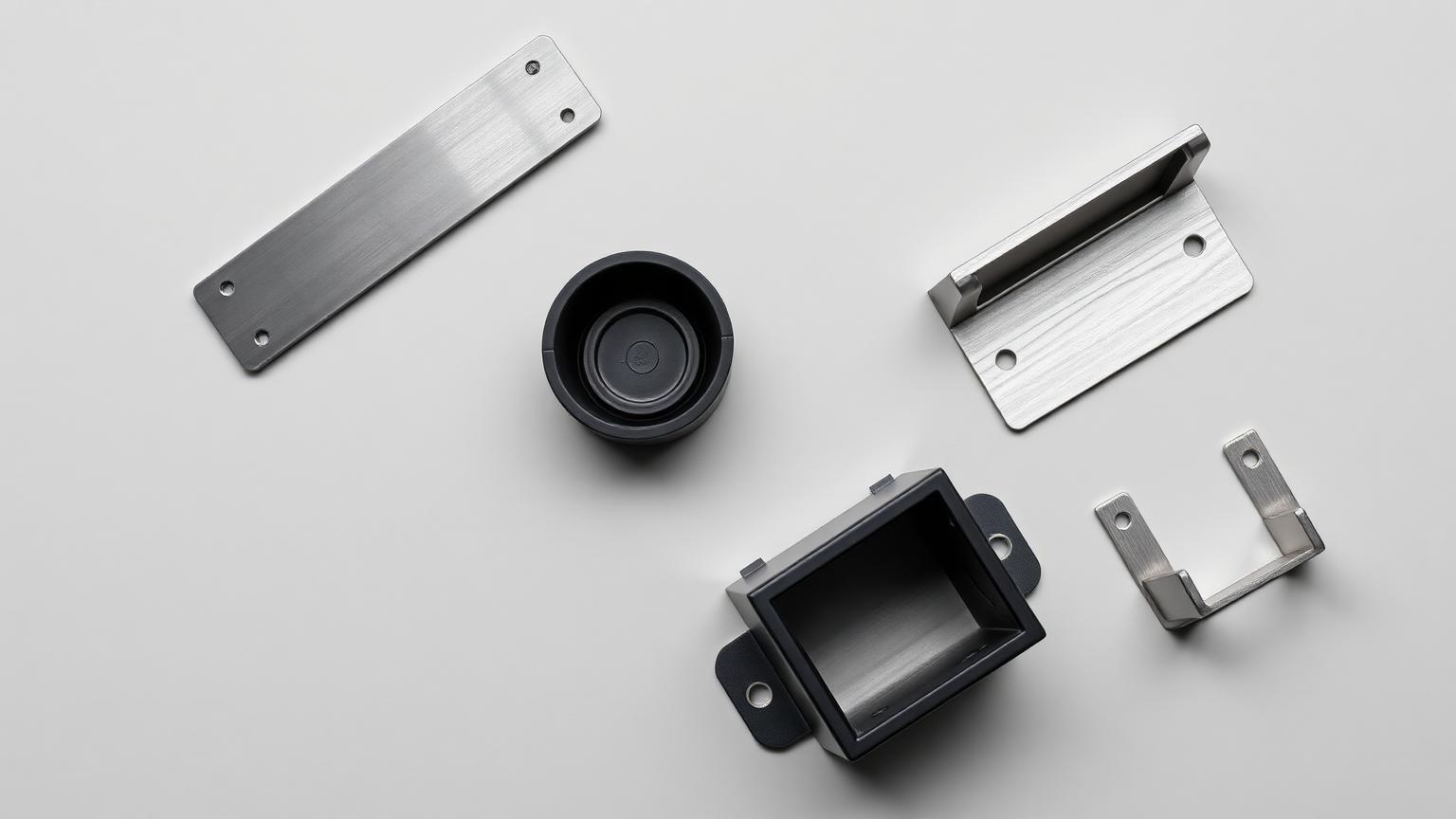
Choosing the wrong manufacturing process is one of the most expensive mistakes in product development. Commit to hard tooling too early and you can sink thousands of dollars into a mold before your design is proven. Machine a part that should have been molded and your per-unit cost stays high forever.
The good news: most sourcing decisions come down to a handful of variables — production volume, material, tolerance, part geometry, lead time, and tooling budget. This guide walks through the four core processes offered through PartGuys.io — CNC machining, injection molding, sheet metal fabrication, and metal casting — and gives you a clear framework for matching your part to the right one.
Whether you need five prototypes next week or fifty thousand production units, you can move straight from this guide to a quote: PartGuys offers instant quotes for 3D printing and fast RFQ turnaround for traditional processes like the ones below.
Procurement has changed. Research shows the majority of manufacturing leads now begin with an online search, and engineers increasingly expect to upload a file and see pricing without waiting days for a sales call. On-demand platforms answer that expectation by connecting your CAD model to a network of vetted suppliers, so you get the right process and a competitive price without managing multiple vendors yourself.
The 30-Second Answer
If you only remember one thing, remember this:
- Low volume, metal or engineering plastic, tight tolerances → CNC machining.
- High volume plastic parts, identical and repeatable → injection molding.
- Flat or formed metal — enclosures, brackets, panels, chassis → sheet metal fabrication.
- Complex metal geometries in medium-to-high volume → metal casting.
The rest of this article explains why, and how to avoid the traps that catch first-time and experienced buyers alike.
The Six Variables That Decide Everything
Before comparing processes, get clear on your own requirements. Almost every manufacturing decision is governed by these six factors:
- Production volume. How many parts — total and per order? This single number often eliminates two or three options immediately.
- Material. Metal or plastic? A specific alloy or resin grade? Required strength, temperature resistance, or chemical compatibility?
- Tolerance and surface finish. How precise must critical dimensions be, and how good does the surface need to look or function?
- Geometry. Is the part blocky, thin-walled, hollow, organically curved, or full of internal features?
- Lead time. Do you need parts in days, or can you wait weeks for tooling to be built?
- Budget structure. Can you absorb a large one-time tooling cost to drive down per-unit price, or do you need low upfront cost?
1. CNC Machining

CNC (Computer Numerical Control) machining is a subtractive process: a computer-controlled mill, lathe, or multi-axis machine cuts away material from a solid block (a "billet") until the finished part remains. Because it works directly from a CAD file with no part-specific tooling, it is the fastest route from design to a functional metal or plastic part.
Best for
- Prototypes and low-to-medium volume production (typically 1–500 parts).
- Tight tolerances — precision machining routinely holds ±0.05 mm, and far tighter where required.
- Strong, functional parts in metal (aluminum 6061, stainless steel, brass, titanium) or engineering plastics (Delrin/acetal, PEEK, nylon).
- Designs that are still changing — no tooling means design revisions are cheap and fast.
Trade-offs to watch
- Per-unit cost stays roughly flat as volume rises, so it becomes expensive at high quantities.
- Material waste is higher than near-net-shape processes because you cut away the excess.
- Very complex internal geometries and deep undercuts can be difficult or impossible to reach with a cutting tool.
Rule of thumb: if you need fewer than a few hundred precise metal or hard-plastic parts, or you are still iterating on the design, CNC machining is almost always the right call.
2. Injection Molding
Injection molding melts thermoplastic resin and injects it under high pressure into a custom steel or aluminum mold. Once the mold (the "tool") exists, each cycle produces an identical part in seconds. It is the workhorse of high-volume plastic production — the reason a plastic clip or housing can cost pennies at scale.
Best for
- High-volume plastic parts — economics typically make sense from the thousands into the millions.
- Repeatable, identical parts with excellent surface finish straight out of the mold.
- A wide range of thermoplastics (ABS, polypropylene, polycarbonate, nylon, TPU) and color/additive options.
- Complex plastic geometries with ribs, bosses, snap-fits, and living hinges designed in.
Trade-offs to watch
- High upfront tooling cost and lead times that commonly run several weeks before the first good part.
- Design changes after the tool is cut are slow and costly — get the design right first.
- Not economical for small batches; the tooling cost has to be spread across many units.
Bridge strategy: many teams CNC-machine or 3D-print prototypes to validate the design, then move to injection molding for production. Low-volume "bridge" tooling in aluminum can also lower the entry cost for the first few thousand parts.
3. Sheet Metal Fabrication
Sheet metal fabrication starts with flat metal sheet and turns it into a part through cutting (laser, punch), bending/forming, and joining (welding, riveting, hardware insertion). It is the go-to process for anything built from flat or formed metal: enclosures, brackets, chassis, panels, frames, and housings.
Best for
- Enclosures, electrical cabinets, brackets, mounting plates, and structural frames.
- Parts made from steel, stainless steel, aluminum, and copper sheet in standard gauges.
- Both one-off prototypes and scalable production runs — tooling is minimal for laser-cut and bent parts.
- Designs that benefit from light weight and high strength-to-weight ratios.
Trade-offs to watch
- Geometry is constrained to what can be cut from sheet and bent — not suited to thick, solid, or fully 3D organic shapes.
- Tolerances on bends are looser than machined features; design with bend allowances in mind.
- Secondary operations (welding, finishing, hardware) add cost and lead time if not planned for.
Rule of thumb: if your part looks like it could be folded from a flat sheet — an enclosure, a bracket, a panel — sheet metal is usually the most cost-effective and scalable choice.
4. Metal Casting
Casting pours or injects molten metal into a mold cavity, where it solidifies into a near-net-shape part. Processes range from sand casting and investment (lost-wax) casting to die casting. Casting shines when you need complex metal geometries in medium-to-high volume that would be wasteful or slow to machine from solid stock.
Best for
- Complex shapes with curves, hollow sections, and internal passages that are hard to machine.
- Medium-to-high volumes where amortizing pattern or die cost makes sense.
- A broad range of metals — aluminum, zinc, steel, iron, and specialty alloys.
- Parts where material efficiency (near-net shape) reduces waste versus machining from billet.
Trade-offs to watch
- As-cast tolerances and surface finish are looser than machining; critical features are often machined after casting.
- Tooling (patterns or dies) adds upfront cost and lead time, especially for die casting.
- Casting defects (porosity, shrinkage) require good design-for-casting practice to avoid.
Many production metal parts use a cast-then-machine workflow: cast the bulk geometry cheaply, then CNC-machine only the precision surfaces. This captures the cost advantages of both processes.
Side-by-Side Comparison
Use this table as a quick reference when scoping a new part:
| Factor | CNC Machining | Injection Molding | Sheet Metal | Metal Casting |
|---|---|---|---|---|
| Best volume | 1–500 | 1,000s–millions | 1–10,000s | 100s–100,000s |
| Tooling cost | None | High | Low / none | Medium–high |
| Lead time | Days | Weeks (tool) | Days–weeks | Weeks (tool) |
| Materials | Metals & plastics | Thermoplastics | Metal sheet | Metal alloys |
| Tolerances | Tightest | Good | Moderate | Looser (as-cast) |
| Per-unit @ scale | High | Lowest | Low–moderate | Low |
| Geometry fit | Blocky/precise | Complex plastic | Flat/formed | Complex metal |
A Simple Decision Framework
Work through these questions in order and you will usually arrive at the right process:
- Metal or plastic? Plastic at high volume points to injection molding. Metal opens up CNC, sheet metal, and casting.
- What is the geometry? Flat/formed metal → sheet metal. Solid and precise → CNC. Complex 3D metal → casting.
- How many units? Low volume favors no-tooling processes (CNC, sheet metal). High volume favors tooled processes (molding, casting) that drop per-unit cost.
- How tight are the tolerances? Critical precision → CNC, or cast/mold then machine the key features.
- How fast do you need it? On a deadline → CNC machining, sheet metal, or 3D printing avoid weeks of tooling lead time.
Still unsure? That is exactly what an RFQ is for. Send your CAD file and target quantity through the PartGuys RFQ tool and get process guidance plus pricing back quickly.
Design-for-Manufacturing Tips That Save Money
Regardless of process, a few habits keep cost down and quality up:
- Loosen non-critical tolerances. Only call out tight tolerances where the part actually needs them — every tenth of a millimeter adds cost.
- Design for the process. Add draft angles for molding and casting, generous bend radii for sheet metal, and avoid deep narrow pockets in machining.
- Prototype before you tool. Validate fit and function with CNC or 3D-printed parts before committing to an expensive mold or die.
- Standardize materials and hardware. Common alloys, resins, and off-the-shelf inserts are cheaper and faster to source.
- Send clean, complete files. A solid CAD model, a 2D drawing for critical dimensions, and a stated quantity get you an accurate quote on the first pass.
These small choices compound. A part designed with the process in mind — correct draft, sensible tolerances, standard stock material — can cost a fraction of the same part forced through a process it was never suited for. When in doubt, share your design early and ask for manufacturability feedback before you finalize it; catching an issue at the quote stage is far cheaper than discovering it after tooling is cut.
Frequently Asked Questions
What is on-demand manufacturing?
On-demand manufacturing lets you order custom parts as you need them — without owning machines or carrying inventory. You upload a design, choose a process, and a network of vetted suppliers produces and ships the parts. It compresses the path from idea to physical part from months to days or weeks.
CNC machining or injection molding for my plastic part?
For a handful of prototypes or a few hundred units, CNC-machine the plastic — there is no tooling cost and you can revise freely. Once you are confident in the design and need thousands of identical parts, switch to injection molding to drive the per-unit cost down dramatically.
When should I choose casting over machining for metal?
Choose casting when the geometry is complex (curves, hollows, internal passages), the volume is medium-to-high, and machining from solid would waste a lot of material or time. For maximum precision on key surfaces, cast the part and then machine only those features.
How fast can I get a quote?
On PartGuys.io you can get instant quotes for 3D printing and fast RFQ turnaround for CNC machining, injection molding, sheet metal, and casting. Upload your file, specify quantity and material, and pricing comes back quickly.
Can I combine processes for one part?
Yes — and it is common. Cast or mold the bulk shape for cost efficiency, then CNC-machine the precision features. Or 3D-print and CNC prototypes to validate a design before investing in injection molding tooling.
Ready to make your part?
Upload your CAD file to PartGuys.io for instant 3D-printing quotes, or submit an RFQ for CNC machining, injection molding, sheet metal, and metal casting. From prototype to production — one platform, one workflow.
Related reading
Have a Topic Suggestion?
We're always looking for new article ideas. Let us know what you'd like to learn about!